

English Հայերեն

Future Leaders Exchange


Let us build a new relationship with Russia and the New Independent States - one based on two peoples coming together in a common commitment to make the tough choices for the long-term health of each country and the world; two peoples aware that having stared each other to the brink of nuclear holocaust, we now have a special responsibility to find in each other and within ourselves the capacity to reconceive our possibilities as two nations, two peoples, one world.

-Bill Bradley

Then-U.S. Senator Bill Bradley cosponsored legislation with U.S. Congressman Jim Leach supporting the historic 1992 FREEDOM Support Act, a law providing for secondary school exchanges between the U.S. and the countries of the former Soviet Union. That program is now known as the FLEX program.


The Future Leaders Exchange (FLEX) is a federal government program that provides opportunities for high school age students from Eurasia to spend a year in the United States, living with a family and attending a U.S. high school. The scholarship is awarded through a merit-based competition, open at no cost to secondary school applicants from Armenia, Azerbaijan, Belarus, Georgia, Kazakhstan, Kyrgyzstan, Moldova, Russia, Tajikistan, Turkmenistan and Ukraine. Recruitment, selection, and placement are administered through a grant to the American Councils for International Education (ACIE) (formerly ACTR/ACCELS). American Councils' placement organization works with local coordinators in communities across the United States and through those coordinators, finds appropriate family and school placements. Local coordinators lead a pre-arrival orientation with the host family, a post-arrival orientation with the student, and provide monthly reports on each student's behavior and adjustment.

For more information, please choose from the following:

- What is the FLEX program and who pays for it?

- Who organizes the program?

- The main goals of the program

- What does the scholarship provide and what is NOT provided?

- What happens once FLEX finalists are selected?

- Host family and student placement

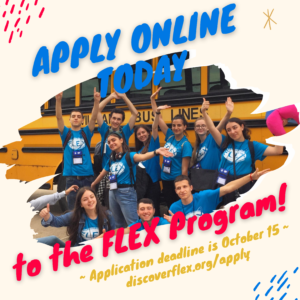
- When and how can I apply?

- How will I benefit from the exchange experience and what are some of the possible disadvantages?


What is the FLEX Program and Who Pays for It?

The Future Leaders Exchange (FLEX) was established in 1992 as the centerpiece of the NIS Secondary School Initiative. This scholarship program is fully funded by the United States government and administered by the Bureau of Educational and Cultural Affairs of the U.S. Department of State. ECA fosters mutual understanding between the United States and other countries through international educational and training programs by promoting personal, professional, and institutional ties between private citizens and organizations in the United States and abroad, as well as by presenting U.S. history, society, art and culture in all of its diversity to overseas audiences.

The program is supported at the local level by U.S. citizens and local secondary schools that voluntarily host, educate, and support students with NO financial compensation.

Its goal is to provide an opportunity for high school students from Eurasia to experience life in a democratic society in order to promote democratic values and institutions in Eurasia as well as to extend a hand of friendship from the people of the United States of America to the people of the countries of the former Soviet Union. Now in its sixteenth year, the FLEX academic year program has provided scholarships to more than 17.000 secondary school students from 12 Eurasian countries who have participated and returned to their homes to pursue higher education and move into the job market.

Applicants are tested and screened in an elaborate open, merit-based competition, for which it is necessary to maintain an infrastructure offices and personnel in key locations throughout Eurasia. All finalists participate in a pre-departure orientation in their home countries 4-6 weeks before they depart for the United States.

A small percentage of the students arrive in the United States in July to participate in a four-week intensive English language enhancement and cultural orientation program. This makes it possible to include students from remote areas where they may not have had the same opportunities to learn English as their counterparts from urban areas. It also allows for the inclusion of a small number of participants with disabilities. All other students arrive in August. FLEX participants are placed in host communities by a network of non-governmental organizations (NGOs) that cooperate with the Department of State under grants awarded specifically for that purpose. Students live with volunteer, unpaid host families, attend high school tuition-free, and engage in local, cultural enhancement activities, frequently with a civic education or community service focus that is in keeping with the democracy-building goals of the program.

American Councils for International Education: ACTR/ACCELS maintains a network of 20 FLEX 'hub' offices throughout Eurasia and handles all of the activities involving recruitment and screening, selection of finalists, communication with finalists and their documentation, pre-departure orientation, participant travel, and maintenance of information management and data processing systems. American Councils serves as a liaison with the students'  families and home/school authorities while they are in the United States. The organization also tracks and coordinates alumni activities. There is an active alumni association based at each program hub and the Department of State receives monthly reports of their activities.

Who Organizes the Program?

The recruitment, selection, orientation, and travel arrangements for the program are organized by American Councils for International Education: ACTR/ACCELS. American Councils for International Education is an international not-for-profit organization leading the development and exchange of knowledge between the U.S. and Eastern Europe, Eurasia, and the Balkans. Its mission is to foster independence and democratic development by advancing education and research, cultivating leadership, and empowering individuals and institutions through learning. Over the past 30 years, American Councils has developed into one of the premier education and training organizations working in the region. It administers more than 30 exchange and training programs, including several U.S. government programs for secondary school students, university students and graduate students, teachers, and professors.

Many other private, non-profit organizations in the United States also support the FLEX Program. The U.S. government has asked these organizations to match FLEX participants with U.S. host families and to organize local activities during the year-long program.

Main Goals of the Program:

  1. FLEX students will acquire an understanding of important elements of a civil society. This will include concepts such as volunteerism, the idea that American citizens can and do act on their own to deal with societal problems, and an awareness of and respect for the rule of law.
  1. FLEX students will show willingness and a commitment to serve as agents for change in their countries after they return home.
  1. FLEX students will develop an appreciation for American culture.
  1. FLEX students will interact with Americans and generate enduring ties.
  1. FLEX students will teach Americans about the cultures of their home countries and teach citizens of their home countries about the United States.

What does the scholarship provide and what is NOT provided?

The FLEX scholarship provides the following:

  • Round-trip domestic and international travel (from home to the United States and back)
  • Monthly allowance to help students participate in social activities and buy necessary personal supplies
  • Placement with a selected U.S. host family for one year
  • Enrollment in a U.S. secondary school
  • Program orientation activities including pre-program preparation and re-entry preparation
  • Program activities arranged in local U.S. communities
  • Medical insurance, excluding pre-existing conditions and dental care.

The FLEX scholarship does NOT cover the following costs:

  • Acquisition of an international passport
  • Personal expenses not covered by the monthly stipend
  • Excess baggage costs
  • Telephone calls made from the U.S. to home or an e-mail account.

What Happens once FLEX finalists are selected?

Upon notification, finalists, alternates and their parents receive orientation materials to prepare them for departure. They must officially notify their FLEX representative in writing that they accept the scholarship and must provide any additional documentation requested as well. Students must begin the process of applying for an international passport and U.S. visa immediately upon acceptance to the program. From May through August selected U.S. exchange organizations match finalists with qualified U.S. host families and arrange for enrollment in local secondary schools. In June and July scholarship recipients participate in a pre-program orientation (pre-departure orientation - PDO) in their home country. Students then travel to their U.S. host families and communities to begin the exchange experience in August.

Please note: Students participating in the FLEX program must return to their home country at the end of the program on the date assigned by American Councils. The U.S. visa issued for program participants will not be amended or extended beyond the program end date for any reason.

Host Family and Student Placement

The non-government organizations (NGOs) that are awarded grants to place students in host families and schools are referred to as "placement organizations" (POs). Placement organizations play a critical role in the functioning and success of the FLEX program because they deal with the program at the grassroots level. Public and private non-profit organizations submit proposals that describe how they will recruit and select host families for their FLEX students how they will find host schools. In addition to identifying schools and screening, selecting, and orienting families, organizations will be responsible for: orienting students at the local level; providing support services for students while they are in the U.S.; arranging enhancement activities and leadership opportunities that reinforce program goals; monitoring students during their stay in the U.S.; providing re-entry training; and assessing student performance and progress. The following placement organizations have placed 2009-2010 FLEX participants throughout the United States:

When and How Can I Apply?

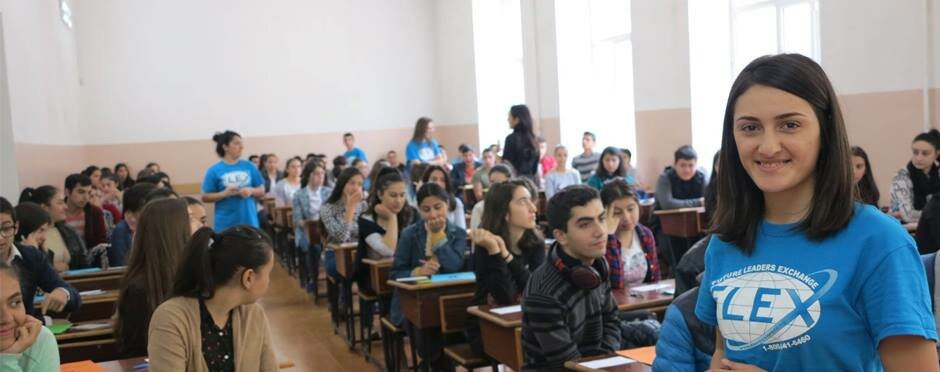
Representatives of American Councils visit regions (see more: Regions where recruitment is carried out) to conduct testing. Applicants who meet the program requirements (see more: Who is eligible to apply to the program and who is NOT eligible) should come to the designated testing center at the time of initial registration and bring proof of eligibility (birth certificate), one recent 3x4 cm photo, and a pen. Testing center locations are announced as soon as possible through press, TV, Radio. FLEX program representatives notify almost all school directors and teachers of the region beforehand. For more information you may also contact American Councils office in Yerevan at (374 -10) 56-00-45 or check the FLEX Application page on this website.

For the 2011-2012 program year, testing will take place as follows:

September 6, 2010: Hrazdan (9:00 AM at School 13)
September 6, 2010: Ijevan (9:30 AM at School 4, Galik Krtaran)
September 7, 2010: Martuni (9:30 AM at School 2)
September 7, 2010: Vanadzor (9:00 at the Pedagogical Institute)
September 14, 2010: Yeghegnadzor (9:00 at the Youth Center in the Culture House), Sisian (5:30 PM at School 3--Round 1 ONLY. Round 2 will be held the following morning.)
September 14, 2010: Talin (9:00 at Talin High School)
September 15, 2010: Goris (1:30 PM at Teachers' House at Gusan Ashot 32)
September 15, 2010: Gyumri (9:00 AM at Shirakatsi University)
September 16, 2010: Kapan (9:00 AM at School 1)
September 16, 2010: Yerevan REGISTRATION (9:30 at Brusov University) 
 

How Will I Benefit from the Exchange Experience and What Are Some of the Possible Disadvantages?

The FLEX Program offers students an opportunity to learn about the people and culture of the United States. FLEX scholars are also young ambassadors who teach Americans about the people and culture of Eurasian countries. Students gain an appreciation for and develop sensitivity to other cultures, experience personal growth and independence, and become better prepared for an increasingly interdependent world. Students form strong ties with their American host families and U.S. communities, building relationships that often last a lifetime. Many alumni have attended prestigious universities upon their return home, and later find exciting jobs that use skills learned during their stay in the United States.

Possible disadvantages

Students who are interested in this program should consider the possible negative effects of this program:

  • You may not return home in time to sit for university/institute entrance examinations.
  • Your university or institute may not defer your admission if you have already been accepted.You may not return home in time to take your final school examinations, instead you would have to take extern exams
  • You may be required by your country to serve in the military upon return.
  • You may have to repeat a year of school.
  • You may not be eligible to receive a gold medal at your home school.
  • Although students participate in an academic program in the U.S., the school curriculum is substantially different than that in your home country.